JP Morgan Chase does not sell a traditional personal loan product. Readers who need a fixed-rate loan for debt consolidation, a big purchase, or an emergency should look at other lenders that provide installment borrowing with clearer repayment terms.
Alternatives include online lenders, credit unions, and several national banks such as Wells Fargo, U.S. Bank, Discover, PNC, and Citi. Recent averages show a two-year loan rate near 11.57%, while typical credit card rates sit higher, around 21.16%.
This guide previews lender types, compares total costs versus revolving cards, and explains prequalification tools that estimate rates without a hard inquiry. It helps shoppers weigh speed, eligibility, and the true cost before applying.
Key Takeaways
- Chase does not provide a standard installment loan product.
- Other banks and credit unions commonly sell fixed-rate loans for consolidation.
- Installment loans often carry lower average interest than many cards.
- Prequalification can reveal likely rates with no hard pull.
- Compare total loan costs, fees, and repayment terms before choosing.
Quick Answer: Chase Bank Doesn’t Offer Personal Loans
Not every big lender lists a stand-alone installment product, and that distinction matters for shoppers today.
What Chase offers instead today
Chase focuses on credit cards, mortgages, and auto lending rather than a traditional installment personal loan.
Some eligible cardholders can use My Chase Loan to convert part of a card line into a fixed repayment plan. That option often has a $500 minimum and adds a set monthly payment to the statement with no new credit check.
Present-time context: why this matters right now
Average two-year loan rates sit near 11.57%, while typical credit card APRs average about 21.16%. That gap makes dedicated installment products worth comparing for debt consolidation or big expenses.
- Quick check: a card-based plan can be fast and convenient.
- Trade-off: it may be limited by available credit and not match a larger unsecured loan amount.
Why Some Big Banks Skip Personal Loans

For strategic and operational reasons, many big-name banks decline to run standalone installment products.
Chase, Bank of America, and Capital One: current stance
Chase, Bank of America, and Capital One currently do not sell a typical unsecured installment product. Instead, they focus on mortgage, auto, home equity, and card portfolios.
Administrative and financial reasons
Large institutions face heavy administrative overhead for underwriting, servicing, and collections. That complexity can pull resources from core revenue lines.
Portfolio risk and capital allocation also matter. Unsecured installment lending can raise loss exposure and reduce return on equity compared with secured or revolving products.
- Big banks frequently prioritize scalable financial products over small unsecured loans.
- Regional banks, online lenders, and credit unions often fill the gap with competitive rates and member-focused underwriting.
- Borrowers should compare rates and total cost across lenders rather than assuming one institution defines the market.
Understanding Chase’s Alternatives: Credit Cards, Auto Loans, and Home Loans

Many consumers find that card-based plans, auto financing, or mortgage products meet most short- and mid-term cash needs.
My Chase Loan: how it works for eligible cardholders
My Chase Loan converts a portion of an eligible credit card balance into a fixed-pay installment. The program requires a $500 minimum and draws from available credit.
There is no new credit check, and repayments show as a set item on the monthly statement. That can give more predictable monthly payments and often a lower interest than the standard card APR.
When a traditional personal loan may still be better
For larger needs, an unsecured personal loan can provide higher amounts and fixed terms that are not tied to revolving utilization.
- Auto loans and mortgages are secured, so they usually carry a lower interest rate but need collateral.
- Converting a card balance affects credit utilization, which can influence credit scores and future rates.
- Borrowers should compare the converted card rate against standalone loan offers to confirm savings.
| Product | Typical Use | Key trade-offs |
|---|---|---|
| My Chase Loan (card conversion) | Small to mid purchases, consolidation | Fast setup, no hard pull, limited by card credit |
| Unsecured personal loan | Debt consolidation, large one-time costs | Often larger amounts, fixed terms, may have lower APR |
| Auto loans | Vehicle purchases | Secured, lower rates, tied to vehicle collateral |
| Home equity / mortgage | Major projects, lower-rate borrowing | Secured by property, closing costs, longer terms |
does chase bank offer personal loans: What to Consider if You’re a Chase Customer

Some consumers prefer account consolidation for convenience, yet price-shopping often uncovers better borrowing terms. Existing customers can weigh the ease of a single login and combined statements against potential savings from outside lenders.
Keeping accounts under one roof vs. shopping the market
Convenience matters: relationship perks and simple servicing can help everyday money management. However, a fixed-rate loan from another lender may lower monthly costs enough to justify switching.
- Prequalify with multiple lenders to see soft-rate estimates that don’t hit a credit score.
- Keep in mind income, debt-to-income ratio, and credit score shape approval and interest rates.
- Compare My Chase Loan limits and APRs against standalone loan offers for total cost and speed.
Borrowers should also check early-payoff terms, fees, and how consolidating card balances changes credit usage. Balance convenience against savings and funding timelines before deciding.
Product Roundup: Best Chase Personal Loan Alternatives by Lender Type
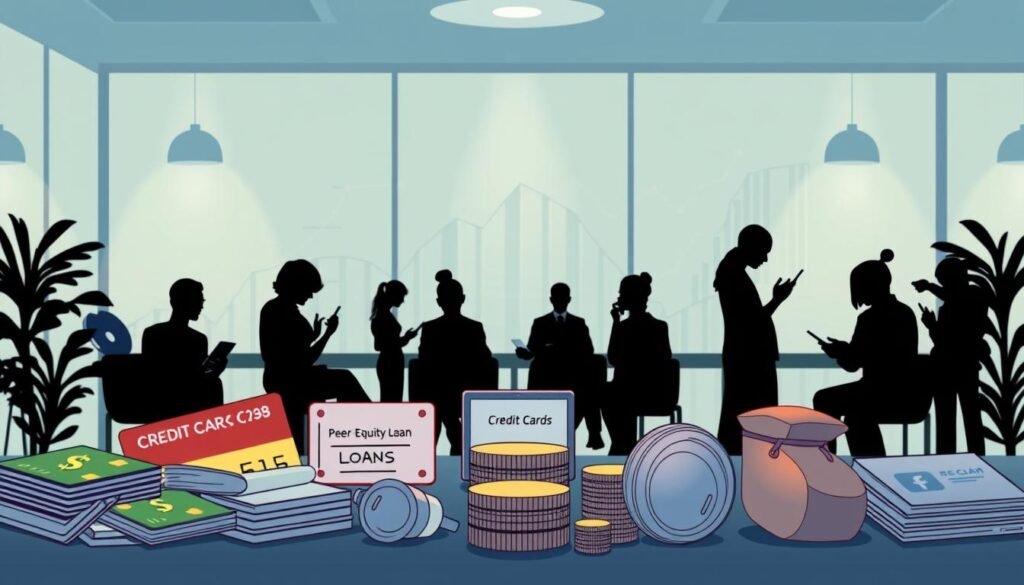
Choosing the right lender means weighing speed, price, and underwriting style across several product types. This quick roundup groups options by provider so readers can match needs to strengths.
Online lenders: fast funding and clear prequalification
Online lenders shine for fast applications and soft-check prequalification. Some fund the same day when completed early, and many display competitive rates and simple terms.
Traditional banks that still make installment loans
National names such as Wells Fargo, U.S. Bank, Discover, PNC, and Citi sell fixed loans and may give relationship discounts to existing customers. Manual underwriting at some banks can slow decisions but also help borderline applicants.
Credit unions: nonprofit pricing, membership rules
Credit unions often post lower average unsecured rates—Q3 2024 showed 36-month averages near 10.89% versus 11.94% at banks. Membership is required, but members may get lower fees and more personal service.
Peer-to-peer platforms: investor-backed flexibility
Peer-to-peer marketplaces connect investors with borrowers. They can widen access for people with thin files or poor credit, though funding timelines sometimes run longer than online lenders.
| Provider type | Strength | When to pick |
|---|---|---|
| Online lenders | Speed, easy prequalify | When fast funding matters |
| Traditional banks | Relationship perks, stability | Existing customers or detailed reviews |
| Credit unions / P2P | Lower rates or flexible approval | When rate or access is priority |
- Check whether a partner bank originates the loan; servicing and protections can differ.
- Compare rates, fees, and minimums to find the best fit for amount and loan terms.
- For those with lower credit, consider secured options or cosigners to improve approval odds.
Rates, Terms, and Approval Odds in the Current Market
Average pricing across providers helps borrowers decide whether a fixed loan or a revolving account fits their budget.
Average APRs: loans versus cards
Two-year unsecured loan rates average about 11.57% today. By contrast, the average credit card APR sits near 21.16%.
This gap means a personal loan can cut total interest costs for many balances. Shoppers should also add fees when calculating true interest rates.
How score and income shape offers
Higher credit score bands typically secure lower rates and larger loan amounts. Income also matters: stronger earnings can lift approval odds and improve pricing.
- Some lenders publish rate ranges by FICO band; use prequalification to get soft estimates.
- Loan terms affect monthly payments — shorter terms raise payments but lower total interest.
- Credit unions often post competitive rates (Q3: 36-month ~10.89% vs banks ~11.94%).
| Provider type | Typical APR (example) | When to pick |
|---|---|---|
| Credit unions | ~10.89% | Lower pricing for members |
| Banks | ~11.94% | Relationship perks |
| Online lenders | Varies by score | Fast prequalify and funding |
In short, comparing rates, fees, and loan terms across multiple lenders rewards most borrowers. Existing cardholders — including those with a Chase card conversion option — should weigh converted balances against external offers before choosing.
How to Choose the Right Lender and Loan

A practical approach to lender selection balances true cost against how fast funds arrive and how easy approval will be.
APR, fees, and total cost of borrowing
Start by comparing APR and all fees. Origination, late, and prepayment rules change the true interest paid.
Tip: Add one-time fees to the stated rate to calculate total cost over the term.
Loan amounts, terms, and monthly payments
Match the loan amount and term to the budget so monthly payments stay affordable.
Shorter terms cut total interest but raise monthly outlay. Some lenders fund up to $50,000 or more; others cap lower.
Customer service, funding speed, and cosigner options
Check reviews on BBB and Trustpilot to judge service. Online platforms often fund the same day; traditional banks may take several days.
For poor credit, a secured loan or a cosigner can help an applicant be able get approval and better rates.
- Verify approval criteria: credit score, DTI, and income requirements.
- Confirm whether joint or cosigned applications are accepted.
- Prefer lenders with clear fee disclosures and flexible payoff terms.
| Factor | What to check | Why it matters |
|---|---|---|
| Pricing | APR, fees, late charges | Determines total interest cost |
| Amount & term | Max loan, monthly payment | Fits budget and reduces risk |
| Service & speed | Reviews, funding time | Ensures fast fixes and quick funding |
Step-by-Step: How to Apply for a Personal Loan Now
Start the application process by checking soft-quote tools to see likely rates before any hard inquiry. Prequalification lets a borrower compare offers from multiple lenders without affecting their credit score.
Prequalification and comparison without hurting a score
Use multiple prequalifiers to gather APR and term estimates. Compare rate, fees, and monthly cost side by side. Choose the lender with the best total cost and clear terms.
Documents, hard inquiry, and funding to your bank account
Complete the loan application with accurate details and upload ID, pay stubs, W-2s or tax returns, and proof of address. A formal submission triggers a hard credit pull that may dip the score briefly.
- Review the agreement for fees and prepayment rules before signing.
- After approval, funds typically arrive by direct deposit to the borrower’s bank account.
- Set up automatic payments and keep copies of all disclosures.
| Step | Action | What to expect |
|---|---|---|
| Prequalify | Soft credit checks at several online lenders | Estimate rates with no score impact |
| Apply | Submit documents and allow a hard inquiry | Formal approval decision, small score effect |
| Funding | Sign agreement and receive direct deposit | Funds land in bank account; set autopay for discounts |
Alternatives to Personal Loans If You Don’t Qualify or Want Lower Rates
When a standard installment loan isn’t available or ideal, borrowers can pick other credit paths that match need, cost, and timing.
Credit cards and BNPL for short-term needs
For small purchases, credit cards can be cheap if balances clear during the interest-free grace period. Many card promos also give 0% APR financing for a set time.
Buy now, pay later (BNPL) plans vary. Some BNPL offers charge no interest but may add late fees. Others act like installment loans with APRs up to 36%.
Home equity loans and HELOCs for lower interest with collateral
Home equity products typically carry lower interest than unsecured borrowing. They can lower monthly cost but use the home as collateral.
Approval and closing take longer, and a missed payment risks the property. For large costs, an equity loan or HELOC often beats unsecured personal options on price.
Credit union PALs and cash advance apps
Credit union PALs deliver small-dollar, regulated terms. Many unions cap APRs (often under payday levels) and focus on members’ needs.
Cash advance apps give quick access to pay for a fee or subscription. They help with short cash gaps but can add up if used repeatedly.
- Short-term: use a credit card or BNPL if you can repay within the interest-free window.
- Lower interest: home equity or HELOCs usually cost less but add collateral risk.
- Small-dollar help: credit union PALs offer member-priced alternatives to high-cost options.
| Option | Typical cost | When to pick |
|---|---|---|
| Credit cards / BNPL | Low to high; some 0% promos | Short-term purchases, promo windows |
| Home equity / HELOC | Generally lower interest | Large expenses, long-term financing |
| Credit union PALs / Cash apps | Moderate to fee-based | Small emergency needs, member access |
Bottom line: compare total cost, timing, and credit impact. Credit unions showed Q3 2024 36‑month unsecured averages near 10.89% versus banks at 11.94%, so member options may help secure a lower overall price.
Conclusion
Summing up, the smartest step is to prequalify across several lenders to see real rate estimates before choosing. ,
Bottom line: Chase does not provide a traditional installment product, so borrowers should compare banks that do, online lenders, and credit unions. Keep mind both price and convenience when deciding.
If speed matters, online lenders may fund faster. Strengthening credit, cutting debt-to-income, or adding a cosigner can lead to better rates and lower interest.
For eligible cardholders, My Chase Loan can handle small balances with set monthly payments, but it is not the same as a standalone personal loan. Prequalify, compare APR, fees, and term, then fund to your bank account with the lender that best balances rate, service, and speed.