Readers will find a clear definition of this unsecured option and how it compares with asset-backed borrowing. It relies on a borrower’s promise to repay, not on a home or car title.
The guide explains how lenders weigh credit history and income to set interest rates and terms. Some providers allow a co-signer, and amounts commonly range from about $500 to $50,000.
Monthly payments are fixed over a set term, which helps budgeting and sets a clear payoff schedule. Funds often arrive faster than many revolving approvals, making this product useful for consolidation, sudden expenses, or major purchases tied to personal needs.
This section previews eligibility, pricing, and where to find these personal loans today. It also notes that not every bank or credit union offers this product and encourages using calculators to estimate monthly costs.
Key Takeaways
- Unsecured borrowing that uses the borrower’s promise, not collateral.
- Interest rates may be higher than secured options but lower than some revolving credit.
- Lenders focus on credit and income; a co-signer can help qualify.
- Fixed terms mean predictable monthly payments and defined payoff dates.
- Typical amounts span hundreds to tens of thousands of dollars in the U.S.
Ultimate guide overview: understanding signature loans in the United States
This guide lays out how unsecured term borrowing works and when it can fit U.S. household finances. It explains the basic mechanics, common uses, and the decision points borrowers face when comparing options.
These personal loans are a term type with equal monthly installments. They do not use collateral, so underwriters focus on credit history and steady income. Some lenders may ask for a co-signer to reduce risk.
Funds often arrive faster than revolving approvals, making this product useful for debt consolidation, medical bills, home improvements, vacations, or other unexpected expenses.
- How to evaluate terms, rates, and fees to compare total cost.
- Which lenders to approach and what documents to prepare for faster decisions.
- How stronger credit and organized finances can earn better pricing and higher amounts.
Next, the guide will break down eligibility, pricing, and application timelines so readers can decide if this option may meet their needs.
What is a signature loan

For those who need a one-time sum with fixed repayment, this unsecured option offers clarity and structure.
Definition: unsecured personal loan backed by a promise to repay
This type relies on the borrower’s signature and promise to repay, not on pledged collateral such as a car or home.
Lenders weigh credit history and income to decide eligibility and set pricing. A co-signer may help if qualifications are borderline.
How it works at a glance: fixed term, equal payments, no collateral
The product is a closed-end, amortized obligation with a set term and equal monthly payments that pay down principal and interest until the balance reaches zero.
Typical amounts range roughly from $500 up to $50,000, though availability and limits differ by bank or credit union.
Before applying, many borrowers use a loan calculator to test scenarios, adjusting amount, rate, and term to see estimated monthly cost and total interest.
- No collateral required; assets are not pledged for this debt.
- Single disbursement and scheduled payoff provide predictability.
- Nonpayment still affects credit and can lead to collections.
Signature loans vs other loan types
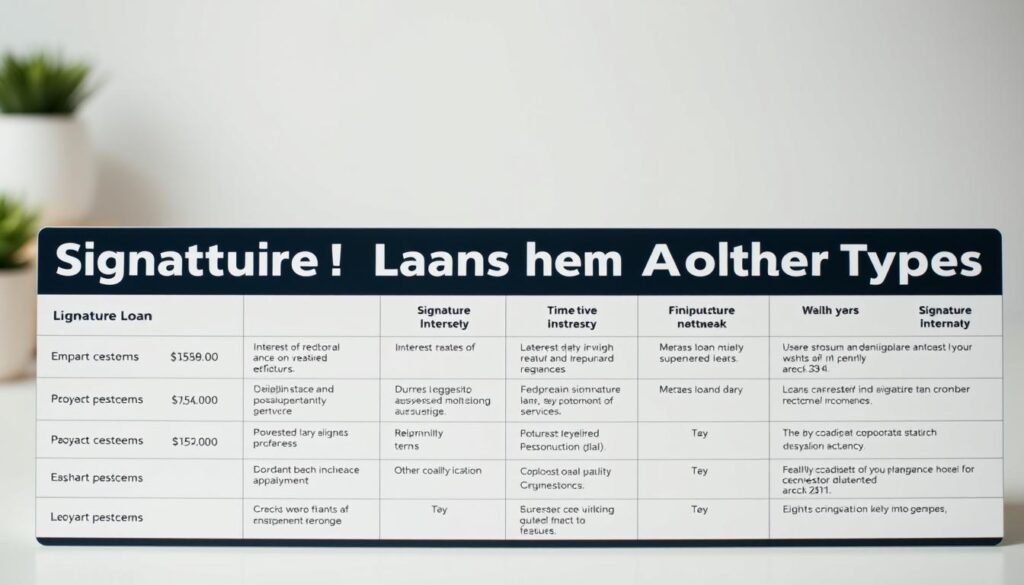
Comparing unsecured personal options with collateral-backed borrowing helps readers weigh risk, cost, and flexibility. This section contrasts secured loans and revolving credit with closed-end personal borrowing so borrowers can match needs to features.
Secured loans comparison
Mortgages and car loans tie repayment to an asset such as a home or car. Using collateral lowers lender risk, which often produces lower interest rates and a better rate for qualified borrowers.
However, missed payments can lead to repossession of the pledged asset, so borrowers trade price for potential asset exposure.
Credit cards and lines of credit stay open for reuse and usually charge variable interest. That flexibility can raise total interest if balances persist.
Closed-end term products provide fixed monthly payments and a set payoff date. Once the account is paid, it closes and fresh funds require a new application.
- Secured loans: lower rates but asset risk (home, car).
- Unsecured personal option: often higher interest but no collateral loss.
- Revolving accounts: reusable, variable cost; term accounts: predictable installments and timeline.
Choosing between them
Borrowers should compare APR, terms, and total interest over the life of the product. Some use a signature loan to refinance high-rate credit card balances into a fixed plan and reduce uncertainty.
Eligibility, credit history, and interest rates today
Underwriters focus on an applicant’s credit profile, earnings, and how new payments fit existing budgets. That mix determines who qualifies and what pricing appears in offers.
Credit score and history
Higher credit score levels often unlock lower APRs and better terms. Lenders look at credit history, recent delinquencies, and overall payment patterns when setting rates.
Income and debt-to-income
Lenders verify income and calculate debt-to-income to judge repayment capacity. A steady income and low DTI help a borrower qualify for larger amounts or lower costs.
Rates, fees, and terms
Typical interest rates vary by profile and market conditions. Some offers include origination fees; others waive them. Prepayment penalties exist but are not universal.
- Co-signers can improve approval odds and reduce pricing for weaker scores.
- Terms cover months to several years; longer terms lower monthly payment but raise total interest.
- Use a personal loan calculator to test amounts, APRs, and terms before applying.
- Prepare pay stubs, W-2s, bank statements, and tax forms to speed decisions.
Common uses and real-world applications

People often use fixed-term funds to move high-rate balances into a single, predictable payment. That choice can simplify monthly planning and reduce the interest paid over time when managed well.
Debt consolidation and credit cards
Consolidating revolving balances—especially high-rate credit cards—into one fixed-rate personal loan can lower monthly interest and produce one payment. It helps borrowers focus on payoff instead of juggling multiple due dates.
Emergency and unexpected expenses
When urgent bills arrive, approved applicants may get funds quickly. Same-day decisions or next-business-day funding can cover medical bills, urgent repairs, or other unexpected expenses without tapping credit lines.
Major purchases and life events
Home projects, essential car repairs, weddings, and travel are common uses. Before borrowing, evaluate total cost versus existing debt, use an itemized budget, and match the amount to the project’s purpose.
- Predictability: a single term with a set payoff date aids budgeting.
- Speed: rapid funding can matter when timing is tight.
- Caution: avoid reopening credit lines to prevent re-accumulating debt.
Applying for a signature loan: steps and timelines

Begin with a soft check to see potential offers; this step often helps pick an appropriate amount and term.
The application process
Prequalification uses a soft inquiry and shows estimated APRs without affecting scores. After picking an offer, a formal application triggers a hard credit check.
Many lenders give near-instant decisions. Some can fund by the next business day after approval.
Documents you may need
Prepare proof of income, employer details, recent pay stubs, W-2s, and tax returns. Lenders often ask for bank statements to verify deposits.
- Check credit reports for accuracy before applying to avoid surprises.
- Use a calculator to estimate monthly payments and test different terms.
- Enroll in autopay to lower missed payment risk and sometimes get a small rate perk.
| Step | Typical time | Tip |
|---|---|---|
| Prequalification (soft inquiry) | Minutes | Compare offers from multiple lender |
| Full application (hard inquiry) | Hours to days | Have documents ready to speed review |
| Decision | Instant to 48 hours | Ask about fees and APR before accepting |
| Funding | Same day to 3 business days | Respond quickly to requests to shorten timeline |
Where to get a signature loan and how to compare lenders
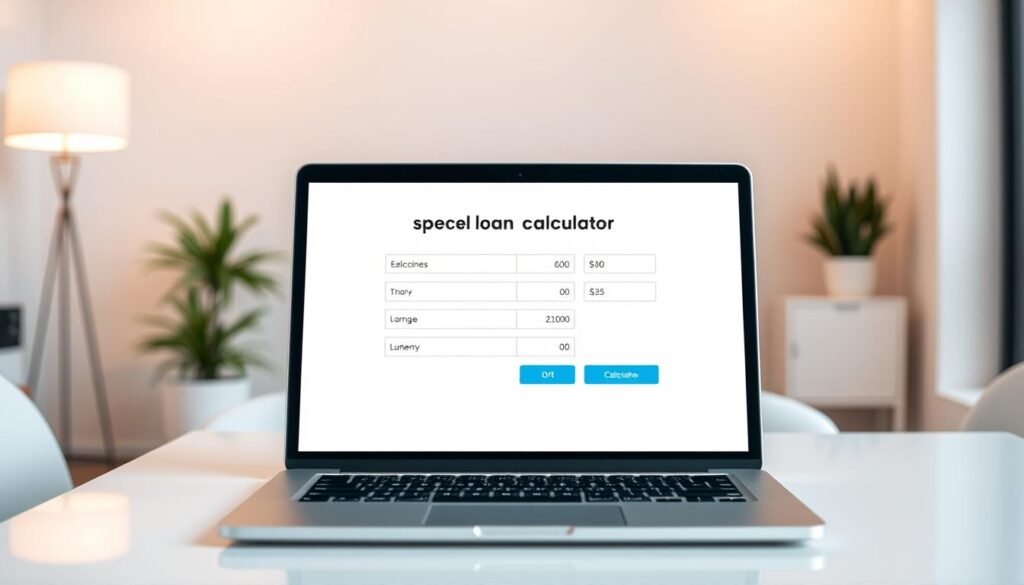
Consumers can choose from online platforms, local banks, or credit unions when shopping for unsecured personal financing.
Online lenders vs banks and credit unions
Online lenders often win on speed and ease. Some issue same-day decisions and next-business-day funds, which helps with urgent home or car repairs.
By contrast, banks and credit unions may offer relationship discounts, in-branch help, and familiar customer service.
Using a personal loan calculator
A personal loan calculator makes apples-to-apples comparisons simple. Enter amount, interest rate, and term to see monthly payment and total interest.
Test multiple scenarios: higher amount with longer term, or lower amount with a shorter term, to find an affordable payment.
- Check APR, origination fees, and prepayment penalties to see true cost.
- Record quotes in a simple comparison sheet: payment, total interest, term, and lender notes.
- Ask about autopay or relationship discounts that may trim the rate.
Final tip: consider secured options only if lower rates justify pledging assets; otherwise, prioritize clear repayment terms and customer support when choosing where to apply.
Pros and cons to weigh before borrowing
Before signing on, borrowers should weigh clear trade-offs between quick access and long-term cost.
Advantages to consider
No collateral risk: Unsecured options mean no home or car serves as collateral, so property stays protected if payments slip.
Predictable payoff: Fixed terms create steady installments and a clear end date. That helps with budgeting and reduces uncertainty.
Fast funding: Many providers approve quickly, which helps cover urgent expenses or consolidate high-rate credit cards into one plan.
Drawbacks to watch
Higher rates: These products often carry higher interest rates than secured loans because lenders take more risk.
Approval can be tougher for people with weak credit. Some lenders add origination fees that raise total loan interest and affect loan interest rates paid over time.
- Compare APR, fees, and prepayment rules to evaluate personal loan interest and true cost.
- Longer terms lower monthly payments but increase total interest and overall interest paid.
- Consider a co-signer if qualifying is hard, but remember shared responsibility affects both credit reports.
- Build an emergency fund to reduce future reliance on loans and recurring expenses.
Conclusion
Choosing the right product means balancing speed, cost, and the borrower’s long-term goals.
Signature loan and other term products offer unsecured, fixed payments that suit consolidation, major purchases, or urgent needs without pledging collateral such as a home or car.
Compare offers from multiple lenders by checking APR, fees, and terms. Review credit score and income first, and use calculators to estimate monthly payments and total loan interest under different scenarios.
Borrowers should match the amount to real needs, avoid overborrowing, and plan for on-time payments. With discipline, this type personal loan can meet defined goals and timelines while protecting future financial health.