Navigating the complexities of student loan repayment can be challenging, especially during periods of financial hardship. One option that borrowers may consider is forbearance, a temporary relief measure that allows for the pause or reduction of monthly payments.
Understanding how forbearance works is crucial for making informed decisions about your student loan repayment strategy. While it can provide immediate relief, it’s essential to consider the long-term financial implications. Interest typically continues to accrue during forbearance periods, potentially increasing your total loan balance.
Key Takeaways
- Forbearance is a temporary relief option for borrowers facing financial difficulties.
- It allows for the pause or reduction of monthly payments.
- Interest continues to accrue during forbearance, potentially increasing the total loan balance.
- Understanding the differences between forbearance and deferment is crucial.
- Borrowers should carefully consider the long-term implications of using forbearance.
Understanding Student Loan Forbearance
When financial hardship strikes, understanding student loan forbearance can be a lifeline for borrowers. Forbearance refers to a temporary postponement or reduction of monthly student loan payments due to financial hardship or other qualifying circumstances.
What Is a Forbearance on a Student Loan?
Student loan forbearance is a temporary relief program that allows borrowers to pause or reduce their monthly loan payments when facing financial difficulties. Unlike loan forgiveness, forbearance doesn’t eliminate debt—it simply provides a temporary break from making full payments while you get back on your feet.
How Forbearance Affects Your Loan Balance
During forbearance, interest continues to accrue on all types of loans, which can significantly increase your loan balance over time if left unpaid. When the forbearance period ends, the accumulated interest may be capitalized, resulting in you paying interest on interest.
Temporary Relief vs. Long-Term Consequences
While forbearance provides immediate payment relief, it’s crucial to understand the long-term consequences, including a higher total repayment amount. Borrowers should consider whether they need short-term relief or if their financial challenges require a more permanent solution.
| Forbearance Features | Description |
|---|---|
| Duration | Typically granted for up to 12 months at a time |
| Interest Accrual | Interest continues to accrue during the forbearance period |
| Credit Impact | Forbearance itself doesn’t negatively impact your credit score |
Forbearance is designed to help borrowers avoid delinquency and default when they’re experiencing temporary financial hardship. Borrowers should consult their loan servicer to understand how forbearance will affect their particular loans and repayment timeline.
Types of Student Loan Forbearance
Forbearance is not a one-size-fits-all solution; there are distinct types tailored to different financial situations. Understanding these options is crucial for borrowers to make informed decisions about their student loan debt.
General Forbearance
General forbearance, also known as discretionary forbearance, is granted at the discretion of the loan servicer when borrowers are experiencing financial difficulties or other qualifying hardships. To qualify, borrowers must submit documentation proving their need.
Eligibility Requirements
Eligibility for general forbearance is determined on a case-by-case basis. Borrowers must demonstrate financial hardship, such as medical expenses or employment changes.
Duration Limits
General forbearance is typically granted for up to 12 months at a time, with a cumulative lifetime limit of three years for federal loans.
Mandatory Forbearance
Mandatory forbearance is required by law to be granted if borrowers meet specific eligibility criteria, regardless of the servicer’s discretion.
Qualifying Circumstances
Qualifying circumstances include serving in AmeriCorps, participating in a medical or dental residency program, or having monthly payments that exceed 20% of gross monthly income.
Time Restrictions
Like general forbearance, mandatory forbearance is granted for up to 12 months at a time. Borrowers can reapply as long as they continue to meet the eligibility requirements.
Understanding the differences between general and mandatory forbearance is essential for borrowers to navigate their options effectively.
Forbearance vs. Deferment: Key Differences
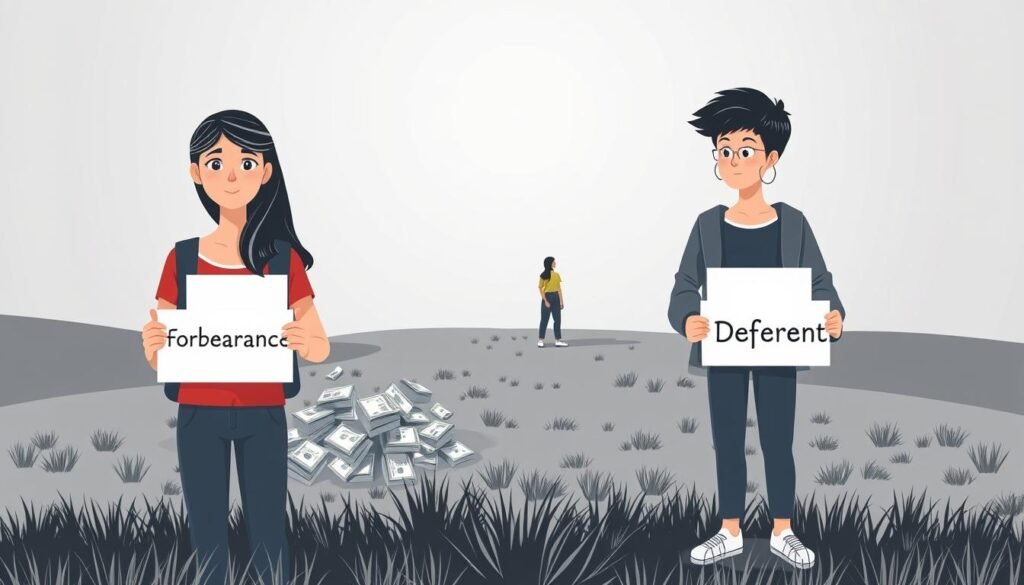
The terms forbearance and deferment are often used interchangeably, but they have distinct implications for student loan borrowers. Both options allow borrowers to temporarily pause their loan payments, but they function differently and serve different needs.
Interest Accrual Comparison
One of the most significant differences between deferment and forbearance is how interest accrues. During deferment, the government pays the interest on subsidized federal loans, whereas interest always accrues during forbearance, regardless of the loan type. This distinction makes deferment more favorable for borrowers with subsidized loans, as it can save them thousands of dollars in interest.
Eligibility Criteria for Each Option
Deferment is available for specific situations such as enrollment in school, unemployment, economic hardship, cancer treatment, or military service. In contrast, forbearance has broader eligibility criteria and may be easier to obtain when facing general financial difficulties, medical expenses, or employment changes.
Which Option Is Better for Your Situation
When deciding between deferment and forbearance, first determine if you qualify for deferment, especially if you have subsidized loans. Consider the expected duration of your financial hardship; deferment may be better for longer-term situations, while forbearance might be sufficient for short-term challenges. Both options protect your credit score by preventing missed payments and potential default, but they differ in their long-term financial impact.
When to Consider Student Loan Forbearance

When facing financial difficulties, understanding when to consider student loan forbearance is crucial. Forbearance can provide temporary relief from loan payments during periods of financial hardship.
Financial Hardship Scenarios
Forbearance is particularly valuable during unexpected financial crises. If you’re dealing with reduced income or unexpected expenses, a short pause on your student loan payments can prevent delinquency or default.
Medical Emergencies
Medical emergencies that result in substantial bills or prevent you from working may justify forbearance. This allows you to manage your finances during recovery without the burden of loan payments.
Employment Changes
Employment transitions, such as job loss or career changes, can create temporary financial instability. Forbearance provides needed breathing room during these periods.
Other Qualifying Circumstances
Other situations that may qualify for forbearance include natural disasters, family emergencies, or unexpected essential repairs. Forbearance can be appropriate if you expect your financial situation to improve within a relatively short time frame.
| Situation | Forbearance Benefit |
|---|---|
| Financial Hardship | Temporary relief from loan payments |
| Medical Emergency | Time to recover without loan payment burden |
| Employment Transition | Breathing room during financial instability |
Even a brief forbearance can help navigate temporary cash flow problems without damaging your credit score. It’s a viable option when you’ve exhausted your emergency savings and need time to stabilize your finances.
How to Apply for Student Loan Forbearance
The process of applying for student loan forbearance involves several key steps that can provide temporary relief. Borrowers must understand the specific requirements and procedures to successfully navigate this process.
Step-by-Step Application Process
To apply for student loan forbearance, start by contacting your loan servicer to determine the type of forbearance you’re eligible for. For federal student loans, you can usually find the necessary forms on the servicer’s website or by calling their customer service line. The application process may vary slightly depending on whether you have federal or private student loans.
For federal student loans, you’ll need to download and complete the appropriate forbearance request form, such as the General Forbearance Request form. Be sure to provide detailed information about your financial situation and the reasons you’re seeking forbearance.
Required Documentation
Gathering the necessary documentation is a critical step in the application process. You’ll need to provide evidence of your financial hardship, such as medical bills, unemployment records, or pay stubs showing reduced income. The specific documents required may vary depending on your loan servicer’s policies.
Following Up on Your Application
After submitting your application, continue making your regular loan payments until you receive written confirmation that your forbearance request has been approved. It’s also a good idea to follow up with your loan servicer if you haven’t heard back within 10-14 business days.
By understanding the application process and required documentation, you can successfully apply for student loan forbearance and get the temporary relief you need.
Pros and Cons of Student Loan Forbearance

Forbearance on student loans offers both benefits and drawbacks that borrowers should carefully consider. While it provides temporary relief from loan payments, it’s essential to understand its implications.
Advantages of Temporary Relief
One of the primary benefits of student loan forbearance is that it offers immediate relief from making loan payments during periods of financial strain. This can help prevent missed payments, delinquency, and potential default, thereby protecting your credit score. Forbearance also provides flexibility during life transitions, allowing you to focus on other financial priorities.
- Temporary relief from loan payments
- Protection of credit score by preventing delinquency
- Flexibility during financial hardship or life transitions
Potential Drawbacks
However, there are significant drawbacks to consider. Interest continues to accrue during forbearance periods, potentially adding thousands of dollars to your total loan balance. When forbearance ends, you’ll face a larger loan balance, which can extend your repayment period or increase your monthly payments. Repeated use of forbearance can substantially increase your total repayment amount.
- Accrual of interest during forbearance
- Increased loan balance and potential for higher monthly payments
- Potential long-term financial implications
Impact on Credit Score
While forbearance itself does not negatively impact your credit score, late payments before approval can harm your score. However, successfully obtaining forbearance can protect your credit by preventing future delinquencies. It’s crucial to weigh these factors when considering forbearance.
Alternatives to Student Loan Forbearance
Managing student loan debt can be challenging, and while forbearance is an option, it’s worth examining other alternatives. If you’re struggling to make your monthly payments, there are several other strategies you can consider to manage your debt more effectively.
Income-Driven Repayment Plans
One viable alternative to forbearance is an income-driven repayment (IDR) plan. These plans are designed for federal student loan borrowers and can significantly reduce your monthly payments to a percentage of your discretionary income, typically between 10% to 20%. After 20 to 25 years of qualifying payments, you may be eligible for loan forgiveness.
Loan Deferment Options
Deferment is another option that allows you to temporarily stop making payments on your student loans. For subsidized federal loans, the government pays the interest during deferment, preventing your loan balance from growing. You may be eligible for deferment if you’re enrolled in school, experiencing unemployment, or serving in the military, among other qualifying circumstances.
Refinancing Possibilities
Refinancing your student loans with a private lender is another strategy to consider. If your income and credit score have improved since taking out your original loans, you might qualify for a lower interest rate, reducing your monthly payments. However, refinancing federal loans with a private lender means giving up federal loan benefits.
Budgeting and Financial Management Strategies
In addition to the above options, employing effective budgeting strategies can help manage your student loan debt. Techniques like the 50/30/20 rule or zero-based budgeting can help identify areas to cut expenses and allocate more funds towards your loan payments. Supplementing your income with side gigs or part-time work can also help cover your student loan payments during difficult financial periods.
By exploring these alternatives to forbearance, you can find a more suitable solution to manage your student loan debt and achieve long-term financial stability.
Conclusion: Making the Right Decision for Your Financial Future
Making informed decisions about student loan repayment is key to securing a stronger financial future. When facing financial hardship, forbearance can provide valuable temporary relief. However, it’s crucial to consider both the immediate benefits and long-term consequences, such as continued interest accrual during the forbearance period.
Before applying, contact your loan servicer to discuss available options, including deferment and income-driven repayment plans. Consider forbearance as a short-term bridge during temporary financial difficulties. If you choose forbearance, try to make interest payments to prevent your loan balance from growing. Set a clear plan for resuming payments when the forbearance period ends, and regularly reassess your financial situation to determine if you can resume payments earlier than planned.